

Electrification for a cleaner glass of milk
For many, it’s a taste of childhood: that little carton of Fristi, Cécémel or Joyvalle you drank at your grandmother’s house or prized open on the school playground. Those familiar flavours come from Aalter, where they are produced by FrieslandCampina. Steam is essential in that process. Now that steam is getting a greener source with a brand-new 15-megawatt e-boiler. When there is a surplus of renewable energy, the boiler kicks in, allowing the existing fossil units to shut down. These will shift gradually into a backup role, until eventually disappearing altogether.
In this way, the dairy producer not only takes a major step towards electrification, but also helps keep the grid in balance. The transition is not taken lightly: a thorough concept study and precise detailed design, commissioned by ENGIE, ensure that the e-boiler is safely, reliably and promptly integrated into the existing steam system, ready to make every drop of milk a little greener.
-large.jpg)
-large.jpg)
-large.jpg)
-large.jpg)
-large.jpg)

Ringbeek gains natural filter treatment
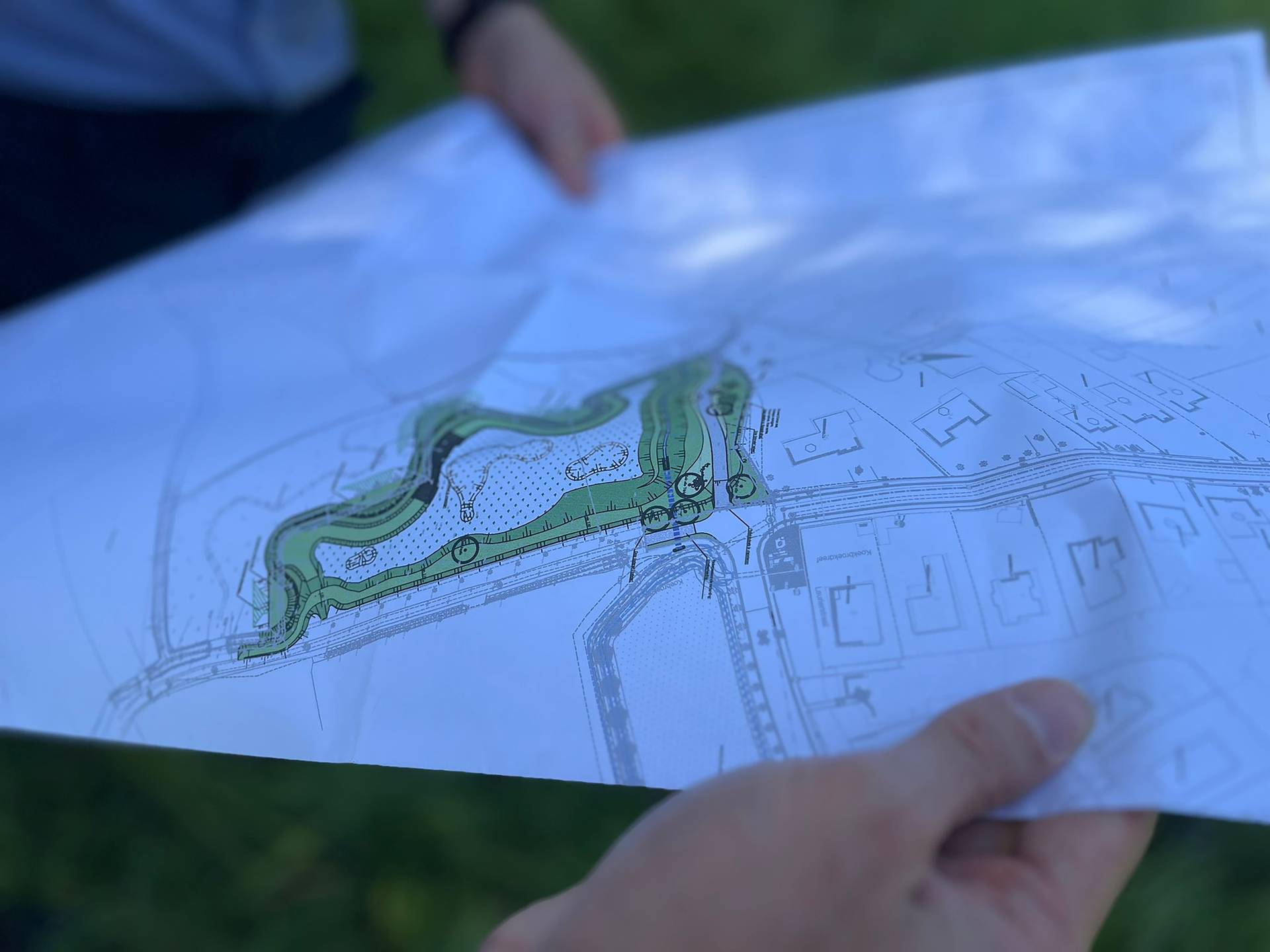
Between Wingene and Oostkamp, the Ringbeek winds its way through the landscape. Beautiful, but nitrogen and phosphorus levels in the water can get too high. As part of the Water Framework Directive, we are installing a reed bed and an iron-sand filter to naturally purify the water. The reeds are planted using local sods. We are also experimenting with other species such as bulrush, which as well as purifying water also serve as a bio-based building material.
After the reeds remove nitrogen, the water flows into the iron-sand filter, where phosphate is captured. Automatically controlled inlet and outlet structures make the system easy to operate. Everything works by gravity: fish ladders raise the water level, allowing perch, minnows and gudgeon to easily swim upstream. We are planting new shrubbery and preserving old pollard willows as valuable landmarks and accommodating bats on their nocturnal journeys.


Torhout revived around renewed piazza
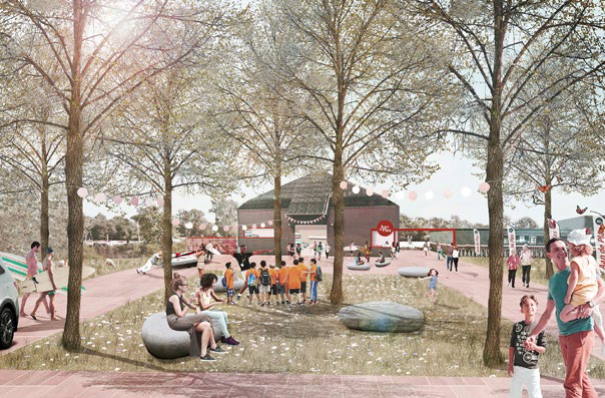
This urban renewal brings out the best in Torhout. Our ambitious masterplan focuses on life quality, safety and sustainability. To make the centre low-traffic and accessible, we are analysing ten traffic scenarios. The market square will be the new beating heart of the city: an open space from façade to façade, finished in natural stone, with a playful fountain and shady trees. Inspired by the Piazza del Campo, it will be an open square of generous proportions.
We are safeguarding the technical quality and sustainability of these interventions. Surrounding streets will receive a new profile, including a separated sewer system to prevent flooding. The masterplan continues to prioritise climate adaptation and urban biodiversity through green connections and hidden gardens. During the works, our disruption-mitigation coordinator ensures clear communication with residents, shopkeepers and visitors. Then, everyone will be able to enjoy a renewed, high-quality city centre.


Heritage as energy testing ground for Europe
Twelve historic almshouses in Bruges form the setting for a unique energy transition. On this UNESCO site, we combine geothermal energy, solar power and smart district heating with MPC, an advanced control technology. Thanks to this intelligent regulation, we can optimally size and integrate multiple installations. This achieves maximum efficiency and minimal energy loss without compromising comfort or heritage value.
As the Belgian pilot site within the European SEEDS project, De Schipjes demonstrates how collective solutions in urban neighbourhoods are achievable and replicable. These insights are immediately put into practice in the Stijn Streuvelsstraat during our ongoing renovation. We are leading this research project and developing a digital toolbox and assessment framework for governments, owners and developers, enabling broader uptake of these energy solutions. Together, we are bringing Europe one step closer to a carbon-neutral future.


A swim between city and polder
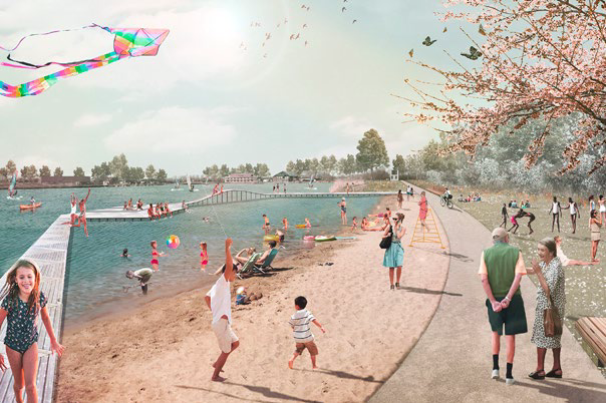
On the edge of Bruges, Sint-Pietersplas is becoming a vibrant meeting place for people and nature. The innovative masterplan integrates landscape, recreation and ecology. The new swimming zone, with 1,000 m² of green banks and 4,000 m² of sunbathing meadow, offers an accessible alternative to traditional swimming pools. An entrance pavilion with showers, lockers and multifunctional spaces tops off the experience.
Sports enthusiasts are also catered for: a bike park and indoor sports fields enrich the facilities. Meanwhile, nature remains central. Which means relocating the wall for sand martins, that vulnerable areas are protected and the grasslands are untouched. Thanks to one of our related studies, the Flemish government is now relaxing the rules around open-water swimming. We are also developing a guide to help municipalities identify safe swimming locations.


Green oasis between dune and village
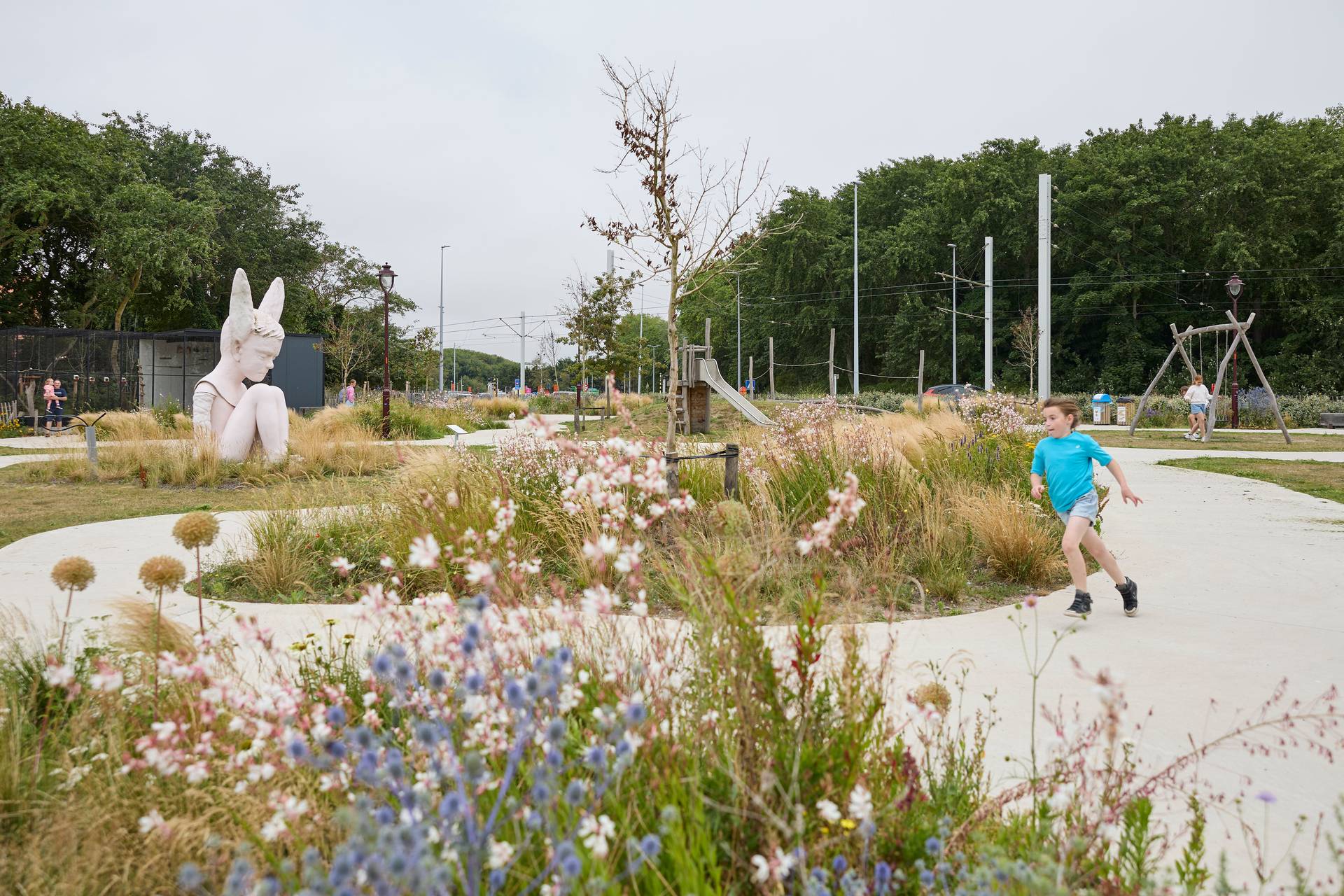
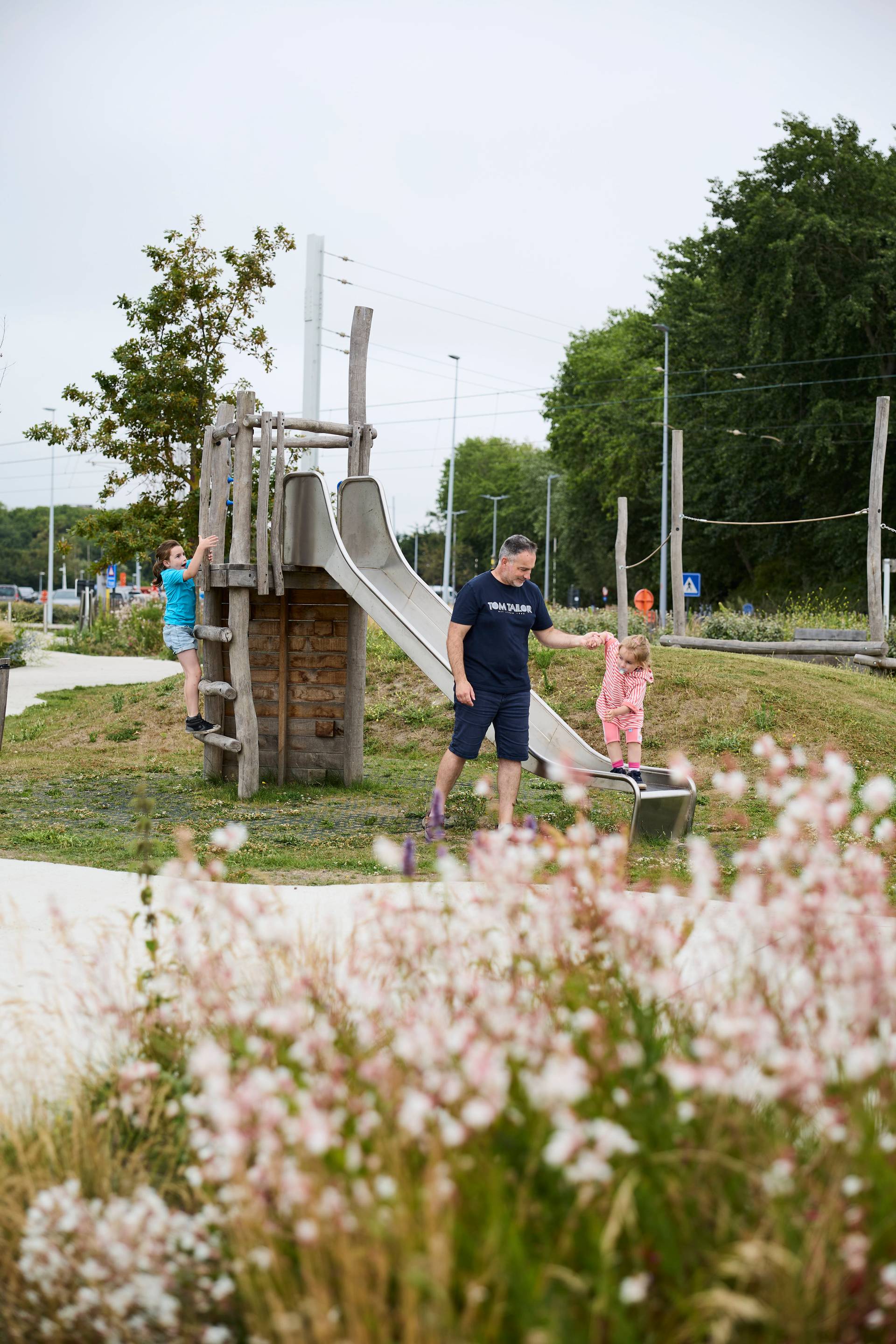
Where a small zoo once stood, a lively neighbourhood park now flourishes between the dunes and the village. Benjamin Park in Wenduine has become an accessible, climate-resilient meeting place for all ages. Organically shaped paths wind past playing fields, benches and lush planting borders.
The white Spioenkop pavilion watches over the landscape as a piece of heritage, while a new lookout point and permeable parking area prepare the site for the future. We are studying the public space, infrastructure and climate adaptation, and designing a recreational space where nature, heritage and experience come together in harmony.


From diesel to e-methanon and beyond
Rescue vessels heading out in stormy weather, pilot boats guiding ships safely into port, ferries transporting commuters daily… More than forty vessels in the DAB Fleet keep Flanders moving in all conditions. Today, the fleet of the Agency for Maritime and Coastal Services has already reduced its carbon emissions by 15%.
But the ambition reaches further: toward a fully green fleet. We are examining which fuel can support that future: battery-electric, e-methanol or green hydrogen. We are assessing technical and financial feasibility and developing a reference vessel for each service type. In this way, we translate climate ambitions into concrete, actionable steps, accelerating the shift towards a sustainable future for shipping.


"In my job I watch shipbuilding evolve at lightning speed: from robust workhorses to ultramodern vessels with cutting-edge applications and innovative technologies. More efficient hulls, lower energy consumption and alternative propulsion such as green methanol and electric systems make our fleet increasingly sustainable."
Grid strenghtening as a lever for green energy
Off the Belgian coast, a 12-hectare energy island is taking shape, designed to bring up to 3.5 gigawatts of offshore wind power ashore. Princess Elisabeth Island will play a decisive role in our electricity supply, reducing dependence on fossil fuels. But building at sea is no easy feat. The island must withstand storms and corrosion, and carry thousands of tons of high-voltage infrastructure.
And nature is not forgotten: the island is designed to support fish, birds and marine life. And on land? There, we are engineering two indispensable links in our national grid. Drawing on decades of expertise at the highest voltage levels, we designed the high-voltage substations Gezelle and Baekeland, which will bring tomorrow’s green electricity deep into the country.


The force of the sea, the assurance of coastal protection
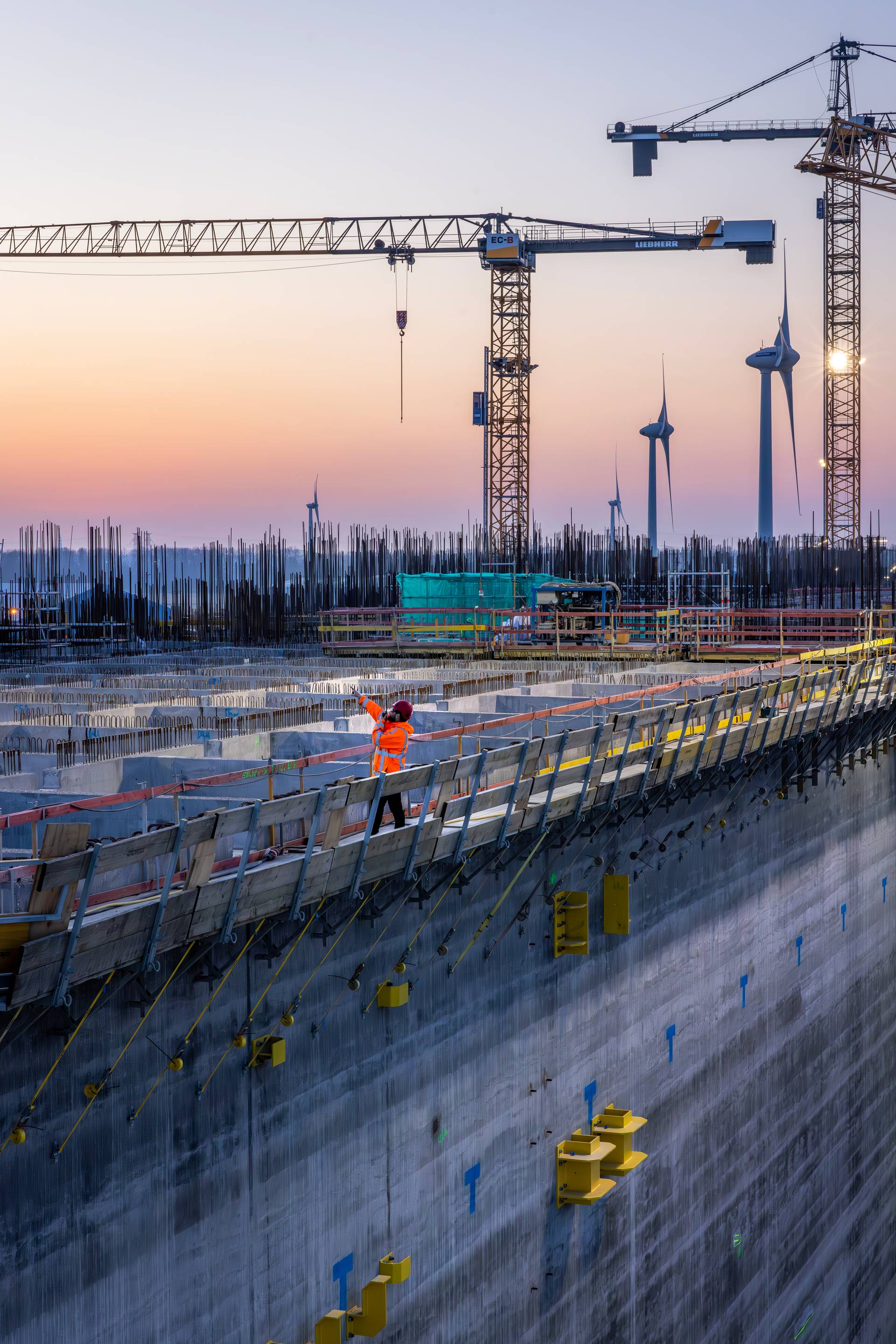
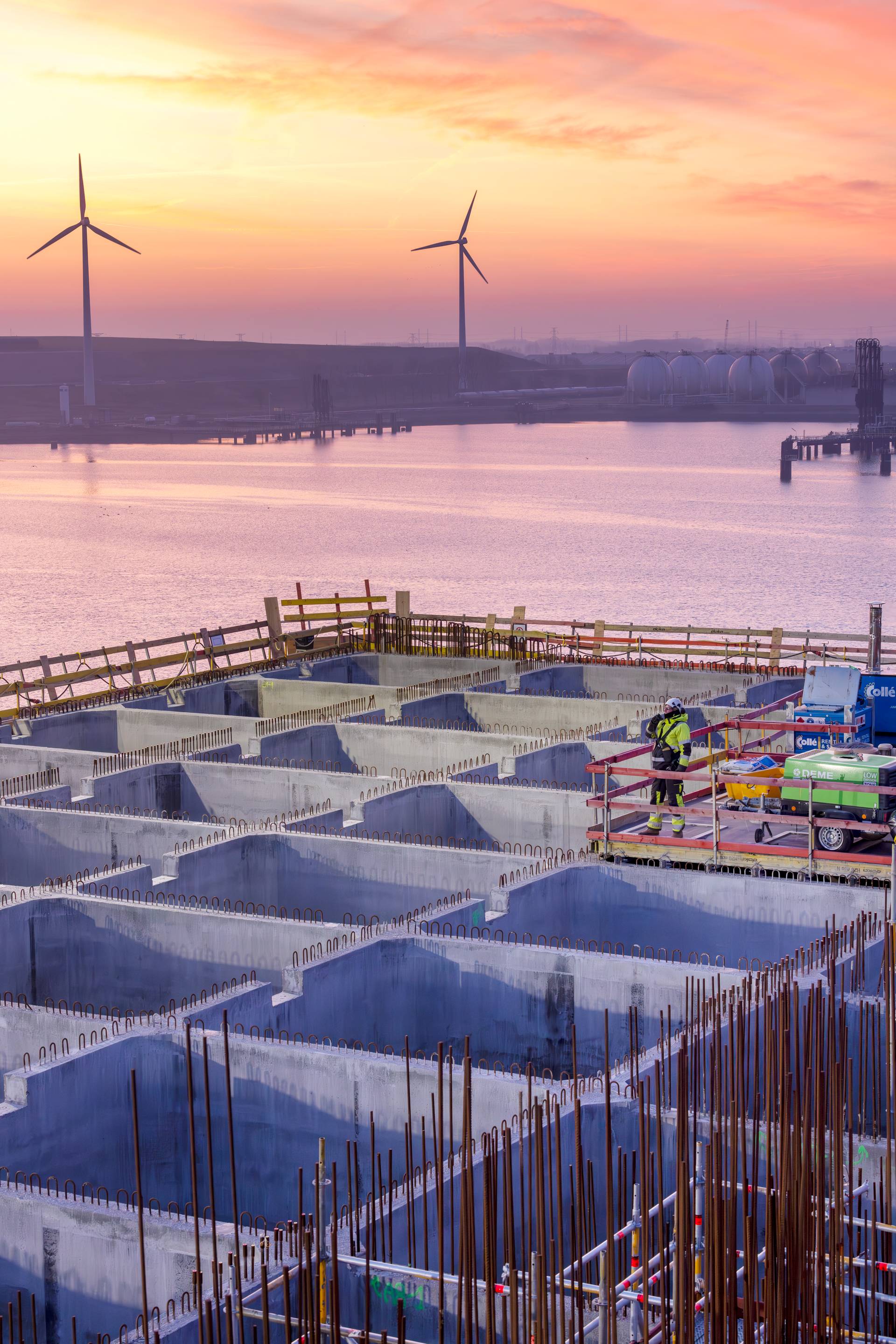
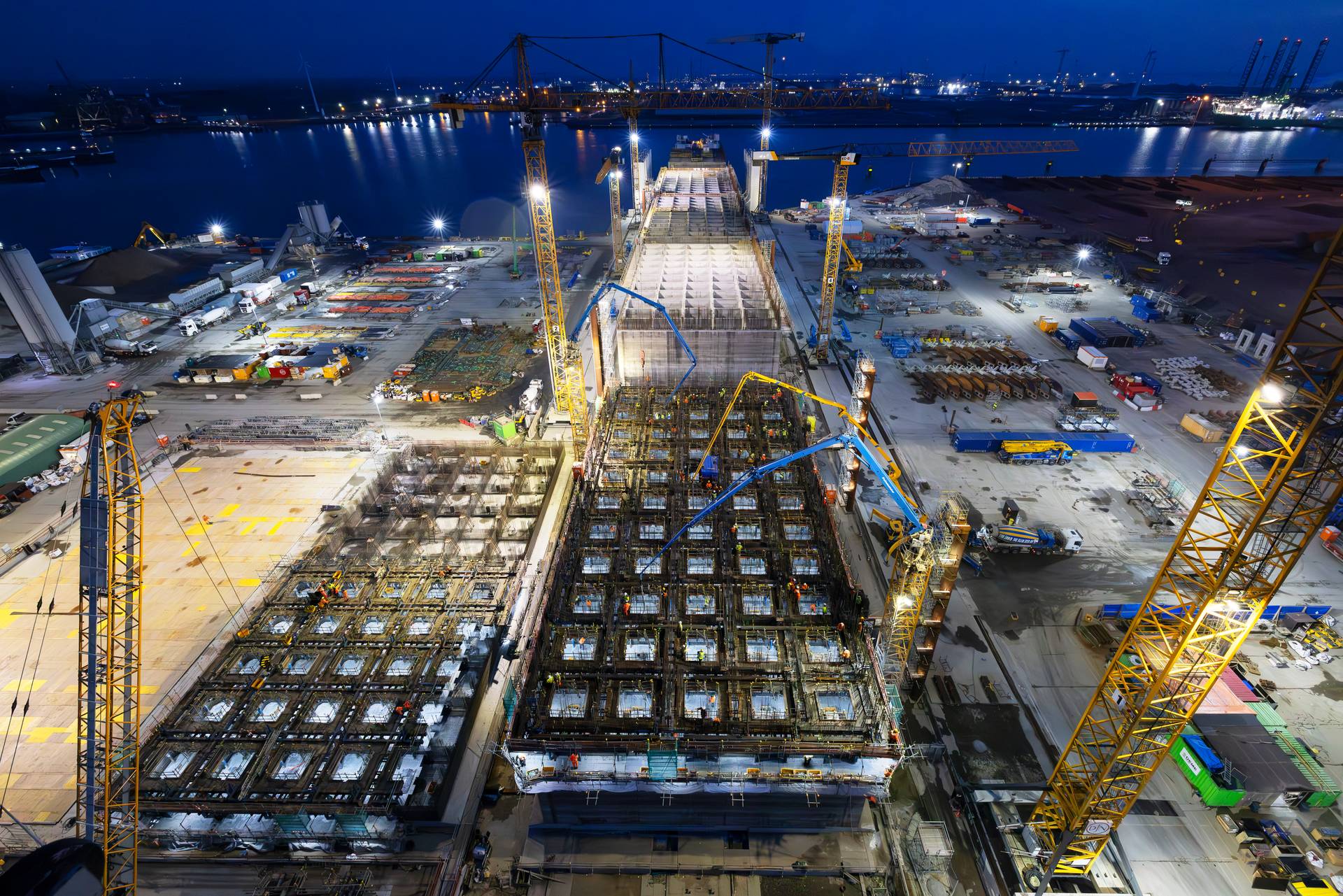
Extreme storm surges. A sea level rising by 30 cm. This is not science fiction. Our Flemish coast and its hinterland are feeling the pressure of climate change. The Coastal Safety Masterplan of the Agency for Maritime and Coastal Services (MDK) gathers all necessary measures to protect our coast until 2050. In Ostend, we are designing—together with MDK -a closable storm surge barrier, new drainage structures, storm walls and a technical building. We are handling the permitting, environmental impact assessment and the full design.
Meanwhile, Sas Slijkens, the historic lock complex connecting the Bruges-Ostend Canal to the outer port, is being revitalised for De Vlaamse Waterweg nv. With redundant drainage infrastructure, we prevent flooding, increase water security and respect heritage, endangered eel populations and the surrounding landscape. In this way, the coast becomes a place where storms are tamed, heritage is preserved and the landscape can be itself again.